Shabnam Begum
Founder, Nazar Ekta Foundation
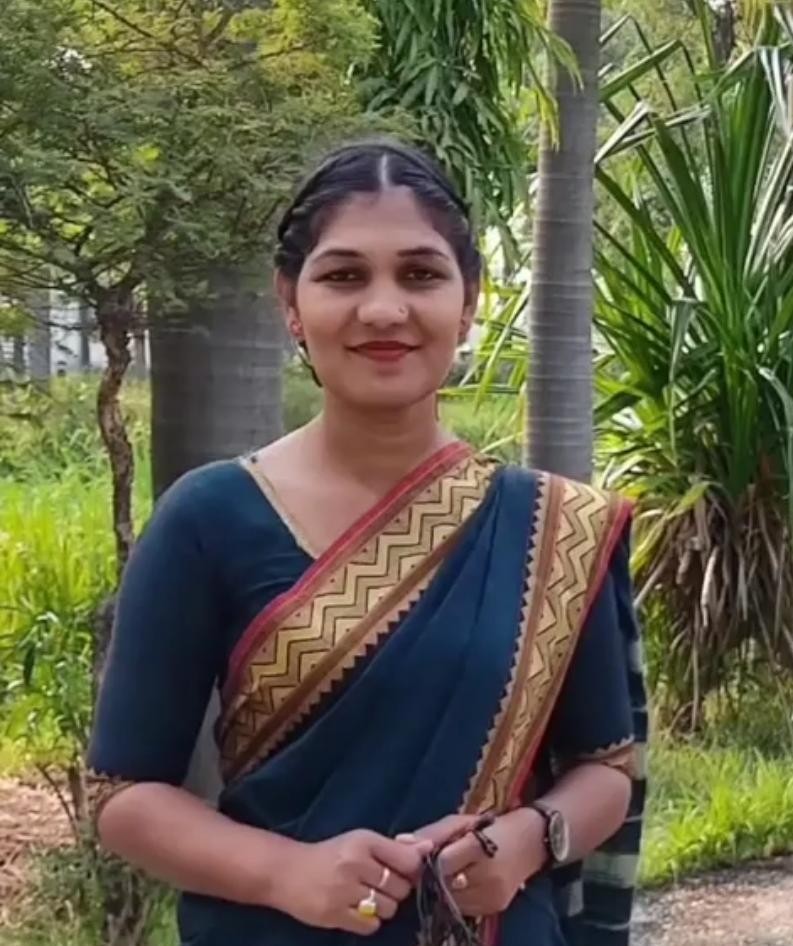
At 16, Shabnam Begum was married and forced to leave school. She refused to let that define her future. Today, she has organised hundreds of women and marginalised families to claim their rights and access education, livelihoods, public services, and government support.
Shabnam Begum
's story
As a girl, Shabnam was told that her future lay in marriage, raising children, and running a household. She was questioned every time she expressed a desire to study or work, and when she gave birth to a daughter, her in-law’s reaction made clear how little value is placed on a girl’s life. But Shabnam persisted. Rather than accepting this fate, she convinced her family to let her study until she graduated. Her journey into public life began as a grassroots reporter with Video Volunteers. The camera gave her a practical way to document problems that officials could otherwise ignore. She reported on sanitation, housing, education, health, gender, public services, and local governance. Beyond reporting, she stayed with the families whose stories she documented, and advocated where she could - such as with government officials, families, local leaders - to help resolve the issues. To her astonishment, her reporting and advocacy led to tangible change - households without water access received handpumps from a generous donor, and Dalit families who were previously denied work could now access employment through MNREGA. Over time, Shabnam moved from documentation to organising and mobilization. She realised that when women and girls came together, discussed their issues and their rights openly, and learnt how complex state machinery (in the form of schemes, schools, or the police system) worked, they could begin to push back. While Shabnam’s core focus is supporting women, she actively engages their families and the men in her community. She has recognised that improving women's lives requires engaging both men and women. Her work today brings communities together to address issues ranging from gender equality to access to basic public services. Initially, Shabnam had to make videos secretly, but as her work gained momentum, her parents, in-laws and husband became more supportive. After her husband passed away in 2017, Shabnam refused to remarry, and instead devoted herself fully to community mobilisation work. In 2023, she formalised her work by founding Nazar Ekta Foundation, and now runs a team of four staff and 20+ volunteers.
The work that
Shabnam Begum
puts in
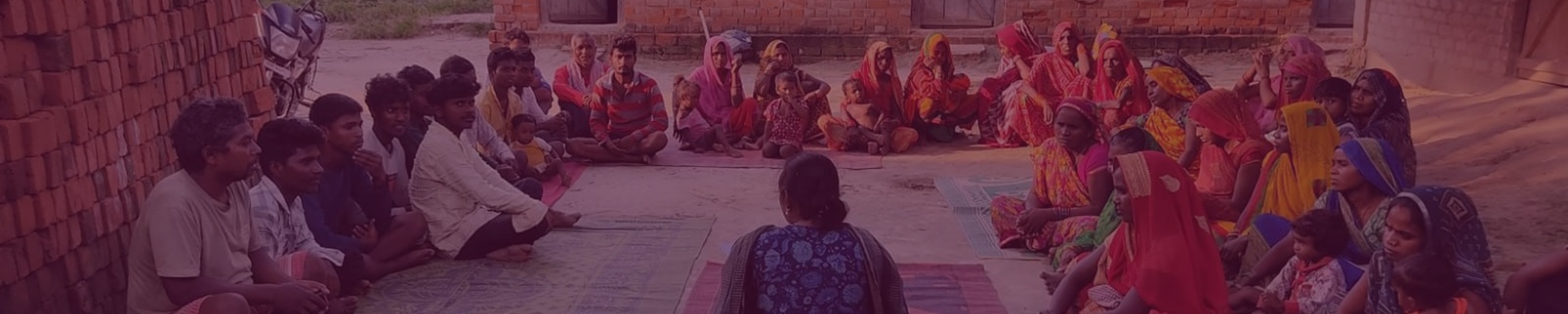
At the heart of Shabnam's work is a sangathan, or women's collective, of around 500 members across five villages in northern Varanasi. Women gather in small groups several times a month to discuss their lives, the challenges they face, the rights they are entitled to and most importantly solutions. A meeting might cover subjects as varied as stepping into public spaces without a ghunghat (veil), sexual and reproductive health, or organising collective action against corruption in the delivery of ration entitlements. As Shabnam often reminds them, "Aapke adhikaar farzi nahi hai, kanoon mein likhe gaye hain" ("Your rights are not imaginary. They are written into the law.") For most of these women, this is the only space where they are allowed to go on their own, and the only time they take for themselves outside a constant schedule of housekeeping, child-rearing, and agricultural labour. Conversations with these women reveal a sense of sisterhood, solidarity and mental peace, because they know they can come to Shabnam with their problems. Women gain a better understanding of their rights, build confidence, and find the courage to speak up, whether within their families, in their communities, or before government officials. Besides creating a safe space for women to come together and find their voices, the collective is also the starting point for practical support. Shabnam helps families access education, government schemes, livelihoods, housing, water, and sanitation. She supports children to enrol and remain in school by using the Right to Education Act, provides legal and emotional support to women experiencing domestic violence, works with local authorities to secure safe water for Dalit households that have been excluded from common water sources, and helps women escape cycles of debt by forming self-help groups and accessing livelihood opportunities. Families turn to Shabnam because she knows how to navigate government systems. She understands where a case belongs, how to document it, which official is responsible, and how to keep following up until action is taken. For many, she has become not only an advocate, but someone they know will stand beside them until a solution is found.

Veeraa Impact Measurement
Apr - Jun 2026
•
Community Phone Survey
•
Updated quarterly
top impact areas
Unlocked access to various government benefits (48%)
Equipped women with skills to navigate household decision-making (41%)
Challenged social barriers and improved freedom, confidence or mobility in the community (35%)
Members
Members
report positive
impact on their lives
Shabnam reports an estimated community size of 600. She shared contact details of 146 members with Veeraa in time for the survey. We will update this number after the next quarterly survey.
Impact of the work
Since beginning her work, Shabnam has helped around 300 children, including school dropouts, enrol or return to school. She has enabled more than 19,000 people, most from Dalit and other marginalised communities, to gain access to clean drinking water by facilitating the installation of pumps and water tanks. She has also prevented more than 50 child marriages, helped 200 families secure housing under the Pradhan Mantri Awas Yojana, and built a network of local leaders and volunteers who now help organise her 500-member women's collective.
What your funds will unlock
Shabnam's work has reached a point where it can grow well beyond one person. Over the next year, she plans to expand her sangathan from 5 villages to 10, doubling its membership from 500 to 1000 women while training a new generation of local leaders to organise and lead independently. These leaders will receive training and modest stipends, enabling them to strengthen the collectives in their focus villages.
As the sangathan grows into new villages, Shabnam aims to help at least 70 more children, particularly girls from marginalised communities, enrol or return to school. She will continue responding to cases of violence against women, helping families access government schemes, and working with the new villages to secure clean drinking water. As she told Veeraa, "Jab main raat ko aankhein band karti hoon, mujhe limitless opportunities dikhti hain." ("When I close my eyes at night, I see limitless opportunities.")
Shabnam's work is currently supported by Sathi, alongside adhoc contributions from individual donors. Funding through Veeraa will help her expand into five new villages by covering the costs of training and supporting community leaders, travel, and local organising.
A monthly contribution of ₹5,000 can support one local leader in Shabnam’s team to organise around 100 women in a new village, respond to crisis cases and help the Dalit households access clean drinking water in this new village, and help enrol five children in school.


Will you support Shabnam as she helps women and marginalised families organise, claim what they are entitled to, and create better futures for themselves and their children?
Review of capabilities
Voices from the movement
Testimonials from the workers that work alongside our leaders
Pravin
Team member, Nazar Ekta Foundation
"नज़र एकता में मेरी बात सुनी जाती है, और समानता के साथ काम किया जाता है। हम लोग समाज में परिवर्तन लाना चाहते हैं, और भेद-भाव खत्म करना चाहते हैं, और यह सोच संस्था के अंदर से ही शुरू होती है।"
Translation: At Nazar Ekta, my voice is heard and work is done with equality. We want to bring about change in society and end discrimination, and this thinking starts within the organization.
Manju Late
Team member, Nazar Ekta Foundation
दीदी ने हमें रास्ता दिखाया। मैं बोल नहीं पाती थी, लेकिन दीदी ने हमें आत्मविश्वास दिया, और अब बिल्कुल डर नहीं लगता। मैं उनके कारण जागरूक हो गई ।
Translation: Didi (sister) showed us the way. I couldn't speak, but Didi gave us confidence, and now I'm not afraid at all. I've become aware because of her.
Vouched for by —
Independent references who have experienced a leader's work first hand.

"शबनम जी महिलाओं के लिए जीती हैं और उनके अधिकारों व सशक्तिकरण के लिए निरंतर संघर्ष करती हैं। वे अपने व्यक्तिगत और पारिवारिक कार्यों से ऊपर उठकर महिलाओं के मुद्दों को प्राथमिकता देती हैं।"
Translation: Shabnam lives for women and continually struggles for their rights and empowerment. She rises above her own personal and family work to give priority to women's issues.
"She is very warm and empathetic. She never comes across as a 'madam', the way some NGO people do. She has no problem sitting and dining with the community. Her belief is that we should all work together, that it is a community problem and we should solve it together."